
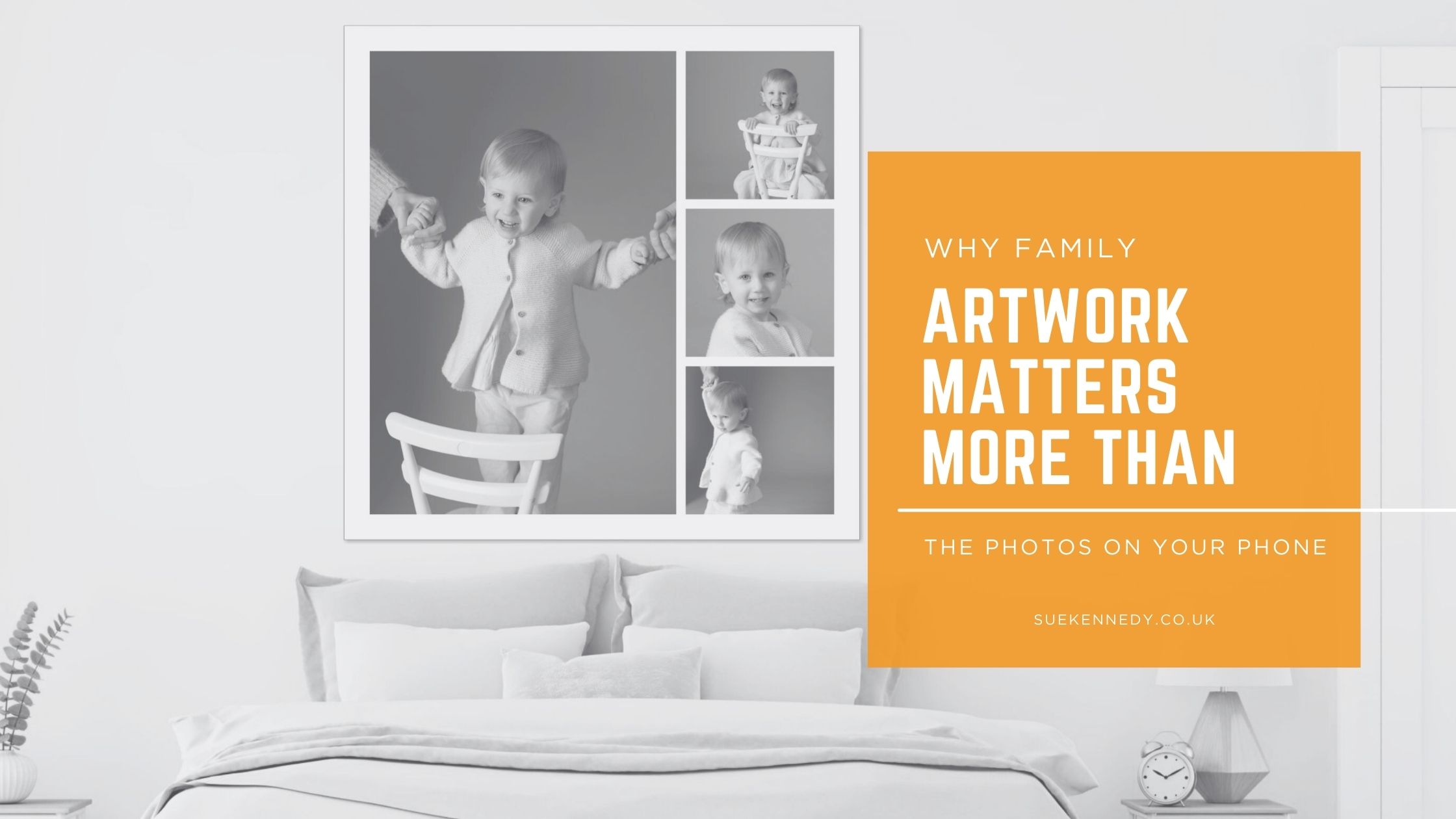
Family artwork matters because it creates a daily, visible emotional connection in your home. Unlike digital photos that get buried in phone storage, printed portraits are seen, felt, and absorbed without effort. They reinforce belonging, strengthen identity, and give children a tangible sense of being loved – not through technology, but through presence.
I grew up when photography still involved film and chemicals to process.
You’d take a roll, use it carefully, and then wait – sometimes months – to get it developed. And when the prints came back, the story was usually the same: Christmas at one end, the family holiday in the middle, and the following Christmas to finish. Half the photos were blurry. Some were missing heads. A few were complete accidents. But none of that mattered.
There was still excitement in spreading them out on the table. Passing them around. Laughing at the bad ones. Recognising the good ones. Seeing your year reflected back at you in physical form.
There was no instant gratification then. No deleting. No retaking endlessly. No scrolling. No filtering. You waited. And because you waited, you valued them differently. They weren’t perfect – but they were tangible.
And those photographs lived in homes. In frames. In albums. On shelves. In shoeboxes. In drawers. In sideboards. In places where family life actually happened.
That’s something I still notice now – grandparents still want photos printed for their homes. They don’t store photos. They display them. Rows of grandchildren in frames. Shelves of faces they love. Portraits they can see instantly, without searching, without scrolling, without technology. Photos become talking points. Memory prompts. Conversation starters. Bridges between generations. They’re not just photographs – they’re access to stories. And when people have passed, they become something else again entirely.
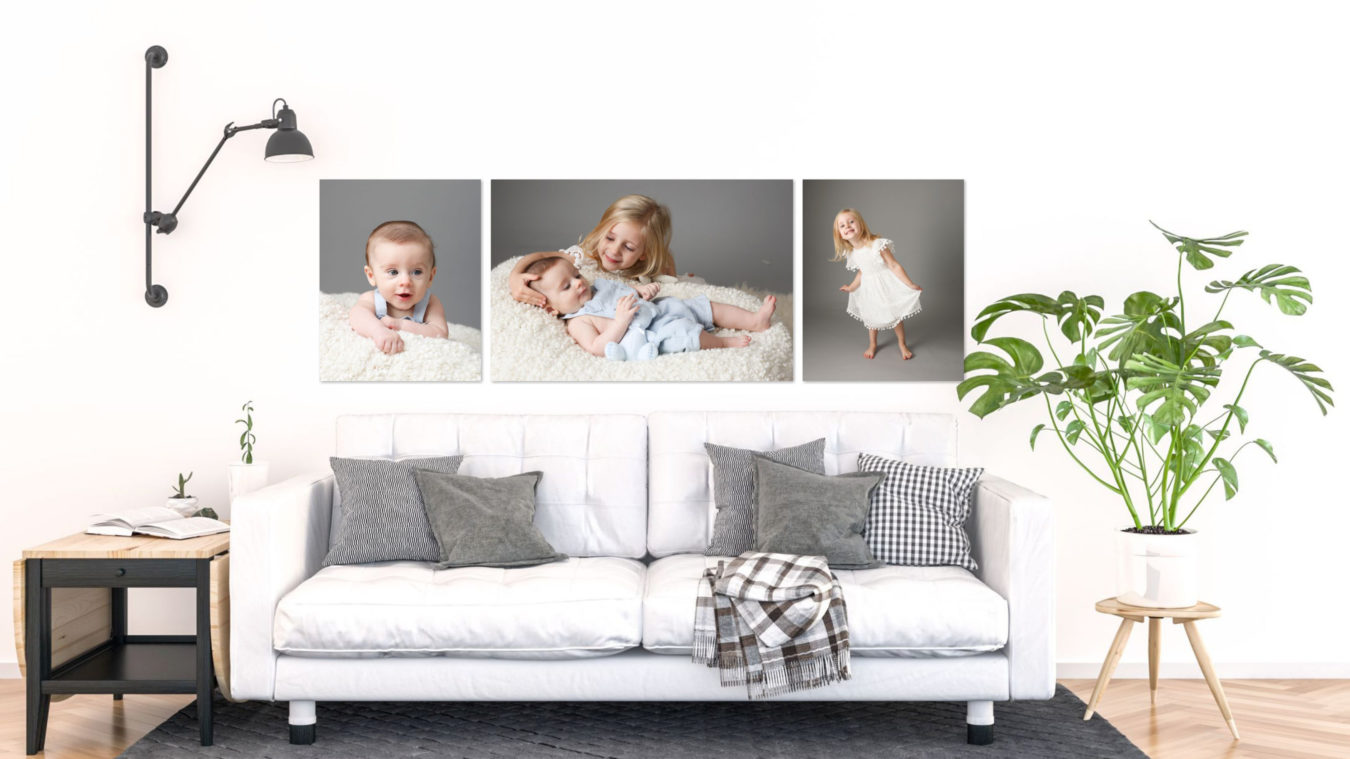
My daughter only knows her grandmother through photographs. She never met her. But I can still share her. I can still talk about her. I can still make her real through stories and images – even though the photographs are all she has.
And yet, I have very few photographs of me with my own mother. I didn’t realise how few until she was ill with cancer. That’s when it hit me – that I had a few of photos of her, but almost none with her. No recent ones. No shared ones. No visual record of us as mother and daughter in adulthood. That realisation was the seed of my Mother & Child experience – not as a product, but as a response to something I hadn’t known I would regret until I felt the absence of it.
That’s the thing about photographs. We don’t understand their importance at the point we take them. We understand it later – when access matters. When memory matters. When presence matters. When continuity matters. And that’s why the question isn’t really: Why should I bother printing pictures?
And that’s why the question isn’t really: Why should I bother printing pictures?
What do I want to remain visible? What do I want to remain accessible? What do I want my child to grow up seeing? What do I want to still exist when technology changes?
Because storage isn’t the same as access. And saving isn’t the same as living with something.
Storage isn’t the same as access
This is the core reason printed photos matter more than digital ones.
There’s a difference between something being saved and something being accessible. A shoebox of photographs could be opened instantly. No passwords. No updates. No formats. No cables. No compatibility issues. No “where did I save that?” No “what device was that on?”
You could discover it unexpectedly. Sit on the floor. Pick one up. Hold it. Look. Feel. Share it. Talk about it.
Digital storage doesn’t work like that. USBs get lost. CDs become unreadable. Hard drives fail. Phones get upgraded, but the data doesn’t always get transferred. Files corrupt. Cloud platforms change. Logins disappear. Formats become obsolete.
There’s a quiet fragility in digital memory that people don’t often talk about – not because technology is bad, but because access isn’t guaranteed.
Print remains the only archive that doesn’t depend on systems, platforms, power, passwords, or compatibility. It simply exists.
If you’re weighing up digital files against print, I’ve written a guide for parents.
How does family photography support emotional well-being?
Photographs do more than document what happened – they anchor how it felt.
One of the things I’ve learned through years of photographing children with their grown-ups – and through conversations around photography, wellbeing and memory – is that photographs reinforce connection. They strengthen emotional recall. They support identity. They ground relationships in something visible.
This is where photo-therapy thinking becomes relevant – not in a clinical sense, but in a human one. Looking at meaningful photographs has been shown to strengthen emotional bonds, reinforce a sense of belonging, reduce stress, lift mood, and help people feel connected to their story and relationships.
Not because of the image itself – but because of what it represents. A photograph isn’t powerful because it exists. It’s powerful because of what it reminds you of.
Visibility changes how we feel
There’s a reason humans have always displayed images in their homes. It creates continuity. It builds emotional stability. It reinforces identity. It makes relationships visible.
When a child grows up seeing themselves reflected in their home environment, they absorb a quiet message: I belong here. I am part of this. I matter to these people. Not consciously. Not verbally. Emotionally.
And for parents, the impact works differently. Seeing your relationship with your child reflected back at you changes how you experience daily life. It softens hard days. It reframes busy ones. It gives context to the chaos. It brings perspective to the noise.
Not because life becomes easier – but because meaning becomes visible.
Why do phone photos get forgotten?
Phone photos are the most common way families record their lives – and the least effective way to actually live with those memories.
They’re taken in the rush. Viewed in the gaps. Consumed in the scroll. Replaced quickly. Even beautiful photos get buried. Even meaningful ones disappear into digital clutter.
That isn’t because people don’t care – it’s because digital systems are designed for accumulation, not presence. They’re built for storage. Not integration. Not visibility. Not emotional continuity.
A different way of thinking about printing
Printing isn’t about preserving the past. It’s about shaping what your family lives with every day.
It’s about what your child grows up seeing. What your home reflects back to you. What remains accessible when technology changes. What becomes part of your family’s emotional landscape.
And when you choose artwork instead of just files, you’re choosing something that lives alongside your family – not something that disappears into storage.
The shift is simple:
From storage to visibility. From accumulation to intention. From archive to access. From digital clutter to emotional clarity.
The most powerful photographs aren’t the ones you take. They’re the ones you live with.
A quiet truth
The most powerful photographs aren’t the ones you take. They’re the ones you live with.
Ready to rethink what lives on your walls?
If this resonates, let’s talk – not about products, but about meaning. What you want your home to reflect. What you want your child to grow up seeing. What you want to feel when you walk through your door. What you want to remain accessible over time. No pressure. No packages. No push.
Just a thoughtful conversation about what matters in your home. Start a conversation.