
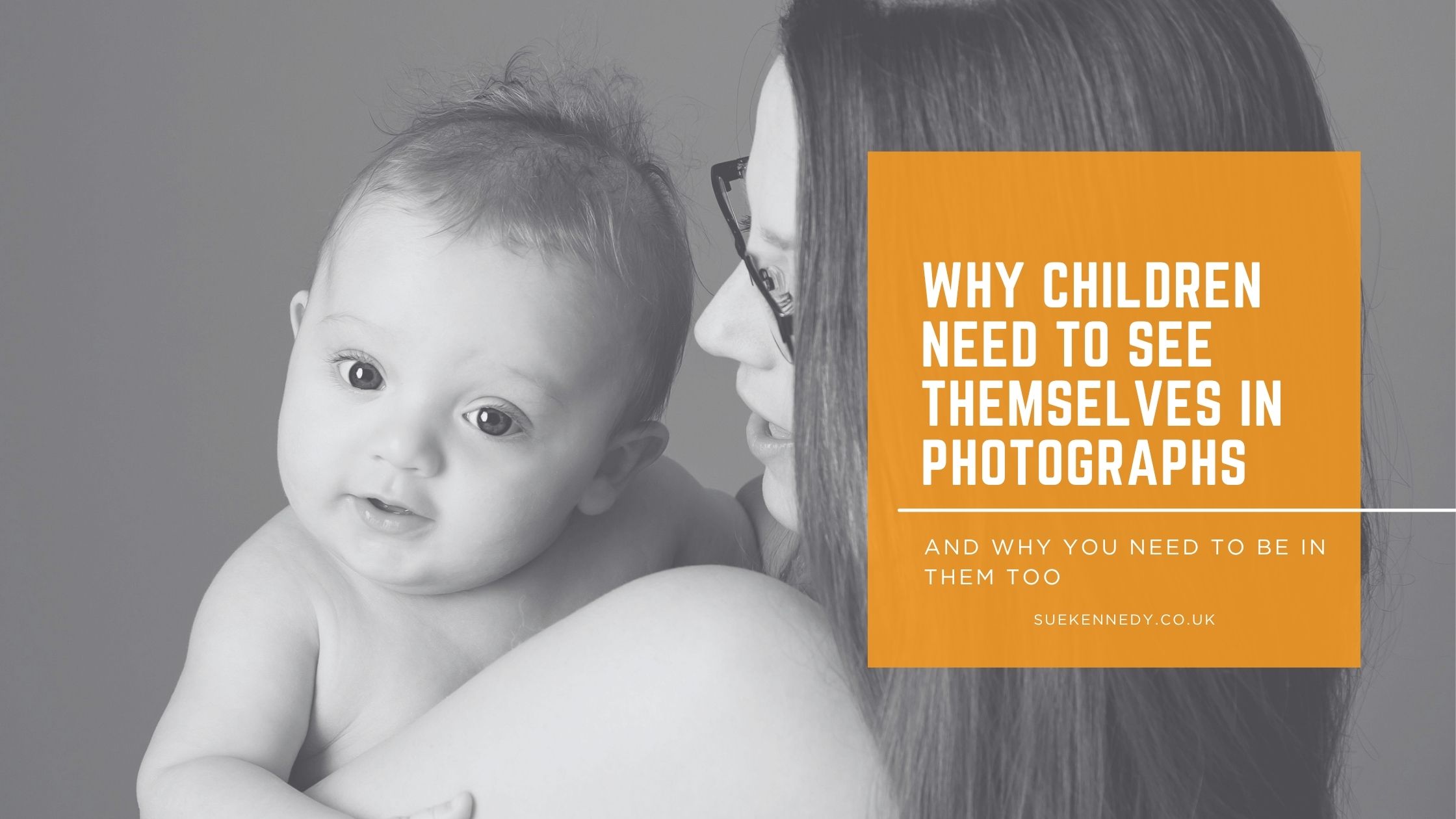
I’ve photographed hundreds of children, and there’s a moment I watch for – the moment they truly see themselves.
Not just recognise their face in a photo on someone’s phone. But really see themselves. As a whole person. Existing in the world. Mattering enough to be photographed.
For three-year-old Maya, it happened as I displayed her portraits on the big screen at my studio a few days after our session.
“That’s ME!” she said, pointing at herself. Then, quietly, she melted into her mother for a cuddle.
Her mother looked proud, and a bit bemused by her daughter’s reaction.
The Moment of Recognition
Most parents don’t realise this, but there’s a developmental milestone that doesn’t make it into the baby books: the moment a child recognises themselves and knows it’s them.
It usually happens between ages 2-4, though it can be earlier or later. It’s not just about seeing themselves in a mirror (that happens around 18 months). It’s about understanding: That person in the photograph – that’s me. The same me who is here right now.
It’s the beginning of self-concept. Of identity. Of understanding that they exist as a distinct person with a past, present, and future.
And photographs play a bigger role in this than most of us realise.
The Mirror vs. The Photograph
Parents often think: “But they see themselves in the mirror all the time.”
Mirrors are different.
In a mirror, children see themselves performing. Aware of being watched (by themselves). They make faces, test expressions, experiment with how they look.
In photographs, they see themselves being.
Unguarded. Authentic. Lost in play or thought or emotion.
That’s the version that builds their sense of self.
Because that’s the version other people see. That’s who they actually are when they’re not trying to be anything.
And when a child sees that version – captured, validated, real – something clicks.
Oh. That’s me. I exist like that. I’m real.
Why We Instinctively Do This (Even If We Don’t Realise Why)
Think about it: we all buy the school photos eventually, don’t we? Even when your child’s doing that weird half-smile they only do for school photographers, who only have a minute to spend with each child.
We stick them on the fridge. Send them to grandparents. Keep them in our wallets.
It’s a love language. We might not consciously think “I’m helping my child develop a healthy self-concept” – but somewhere, instinctively, we know: they need to see themselves. They need evidence they exist. They need to know they matter enough to be displayed at home.
The research backs this up – there are studies on how children who regularly see photographs of themselves develop stronger self-awareness and confidence. But honestly? I think most parents already know this in their bones. We’ve just never named it.
What I’ve Noticed Over Twenty Years
Children who regularly see photographs of themselves – properly displayed, not just buried in a phone – tend to carry themselves differently.
More confident. More secure in who they are. Better at understanding their own emotions.
It’s not about vanity. It’s about identity formation.
Seeing themselves helps them know themselves.
And when they see themselves in moments of connection – being held, being delighted in, being chosen – they internalise that they’re worthy of love.
Not because someone told them. Because they saw the evidence.
The Portrait That Changed Everything
I’ll never forget photographing six-year-old James.
He was quiet. Reserved. The kind of child who observes more than participates.
His mother was worried. “He’s so shy. I don’t know how to help him feel confident.”
During the portrait experience, I caught a moment: James, completely absorbed in examining a toy car I’d let him hold. His expression was pure concentration. Intelligence. Curiosity.
When I showed his mother the image, she gasped.
“I’ve never seen him look like that.”
“Like what?” I asked.
“Like himself.”
She’d been so focused on what he wasn’t – outgoing, chatty, socially confident – that she’d stopped seeing what he was.
We printed that photograph large. She hung it in his room.
A year later, she told me: “He looks at that photo when he’s anxious. I think it reminds him of who he is when no one’s asking him to be different.”
That’s the power of being seen accurately.
What Happens When Children Aren’t Photographed
I see the opposite pattern too.
You know the story: the first child has hundreds of photos. The second has significantly fewer. By the third? Lucky if they get the annual school photo.
Not because the younger ones are less loved. Just… life happened. The novelty wore off. You got busier.
But those children notice.
They don’t articulate it as “I’m not worth documenting.” But somewhere, it settles in: I’m not the one people think to capture. I’m not the one who matters enough.
And that becomes part of their self-concept. The invisible child. The afterthought.
It’s heartbreaking. Because every child deserves to see themselves through loving eyes.
Every child deserves evidence that they exist. That they matter. That someone thought they were worth capturing.
The Baby’s-Eye View
I saw a TED talk (Why you think you look bad in photos presented by Teri Hofford), and she spoke about the angle a baby sees their parent from – basically up their nose initially.
That’s their world for the first few months. Looking up. Seeing you from the least flattering angle possible.
And they don’t care. To them, you’re perfect.
So when they are old and they see a photograph from when they were a baby, of you and them together – from the angle everyone else sees – it’s a revelation. A different perspective they’ve never had access to before.
That thrills them. Because suddenly they can see what everyone else sees: the person who loves them, holding them, looking at them like they’re the most important thing in the world.
No one hangs a portrait from baby’s view of Mum – that would not be a flattering angle. But maybe we should, just to remember: that’s how they see us. And they think we’re magnificent.
The Mother Who Wasn’t in Any Photos
This works for adults too, though we rarely talk about it.
I photograph so many families where the mother has completely disappeared from the visual record.
Hundreds of photos of the children. None of her.
And when I gently suggest we include her, she resists.
“I don’t photograph well.” “I haven’t lost the baby weight.” “Just get the kids, they’re what matters.”
But here’s what I want those mothers to understand:
Your children need to see you in the story.
Not a perfect version. Not someday when you’ve lost weight or styled your hair or feel more put-together.
They need to see you now. Exactly as you are. The person who shows up for them every single day.
Because when they look back at their childhood photos and you’re not in them, what do they learn?
That mothers don’t matter enough to photograph. That women disappear as they age. That being seen is something to avoid.
Is that what you want to teach them? Stop Editing Yourself Out
What Good Photography Actually Does
Here’s what I’ve learned in twenty years:
Good photography isn’t about making people look different than they are. It’s about showing them what’s always been there but they couldn’t see.
The tenderness in how a father holds his daughter. The quiet strength in a mother’s face when she’s tired. The pure, unselfconscious joy of a child at play.
It’s witnessing. And witnessing is powerful.
Because when someone truly sees you – not the performed version, not the filtered version, but the real you – it changes something.
You internalise: I exist. I matter. I’m worth capturing.
And for children especially, that becomes the foundation of everything else.
If you’re based in Hertfordshire or Essex and you’d like to explore what that looks like, you can find out more about my Mother & Child portrait experience here.
The Practical Bit
I’m not saying you need professional photos every month. (Though I’d love that as a business model.)
But I am saying:
Photograph your children regularly. And show them the photos.
Not just on your phone where they disappear into the scroll. Print them. Small ones, big ones, whatever works for your space and budget.
Let your children see themselves:
- Being loved
- Being themselves
- Being enough exactly as they are
And – this is crucial – put yourself in the frame.
Ask someone to take the photo. Set a timer. Use a tripod. Doesn’t matter if your hair’s a mess or you’re in yesterday’s clothes.
Your children don’t need you to be perfect. They need you to be present. Visible. Real.
They need evidence that you were there. That you mattered. That their childhood included you, not just your invisible labour.
What One Mother Realised
I’ll close with this.
A mother came back to me a year after our portrait experience. She wanted to book again.
“I hung the photos in our hallway,” she said. “The ones with all of us together. And I caught my daughter showing them to her friend last week.”
She paused, tearing up.
“She was pointing to me in the photo and saying, ‘That’s my mum. She’s really good at cuddles.’ Like she was proud of me.”
That’s when it hit her: being visible to her daughter mattered. Not someday. Right now.
“I spent so long thinking I needed to wait until I looked better to be in photos. But she doesn’t see what I see. She just sees her mum.”
That’s what children see. Not our flaws. Just us.
And they deserve to have evidence of us. Of the love we gave. Of the life we built together.
Even if we don’t feel ready. Even if we don’t feel worthy. Even if we think we’ll do it “later when…”
Later never comes.
But right now? Right now is here.
And you’re in it. You matter. You’re worth capturing.
Don’t edit yourself out of your children’s story.
FAQ’s
A more comprehensive set of FAQ’s can be found here.
If this resonated, the next piece in this series is When Did We Stop Being in the Picture? Or, if you're ready to slow down and actually do something about it, let's have a conversation.
 About the photographer: Sue Kennedy runs Sue Kennedy Photography, a family portrait studio in Harlow, Essex. She helps parents of babies and young children put their love into words and make that love visible through photographs and artwork displayed in their home, so their children grow up knowing who they are, where they belong and how deeply they have always been loved. Her child-led approach reveals the little expressions and moments that matter most.
If you’d like to explore what this could look like for your family, you can start the conversation here →