When do babies actually recognise their parents?
You’re on the living room floor, and your baby is doing that new thing where her personality is suddenly loud. She crawls away. She turns back. She grins like she’s in on a joke. Then she reaches for whoever is closest – you, your partner, a grandparent – and for a second your brain whispers, Do they really know it’s me?
Here’s the honest answer: babies recognise their parents much earlier than most people realise – and by around 8 months, recognition often shows up in small, everyday ways rather than dramatic ones.
If your baby is sociable, that can actually be a sign of security. But it can still stir up a quiet fear, especially with nursery or returning to work on the horizon: Will I still be their person?
Let’s walk through what recognition really looks like, and the simple signs that can steady you on the days your mind spirals.
Why does this worry feel so sharp when your baby is sociable?
If your baby smiles at everyone, you can end up feeling like you’re competing with the whole world.
You’re not.
A sociable baby is often a baby who feels secure. They’ve had enough steady care that they can look outward. They can take people in. They can be curious.
But here’s the part nobody says out loud: when your baby is easy with others, it can stir up a quiet fear in you.
Do they really know it’s me?
And if you’re still in the maternity leave bubble, this fear can sneak up even more. Because even when someone else is holding your baby, you’re usually still there.
Your voice is in the room.
Your footsteps are familiar.
Your smell is close.
So your baby can happily reach for a grandparent… and still be tracking you in the background. You don’t always see the “choice” happening, because you’ve been the constant.
Picture this: you’re on the rug with toys scattered everywhere. Your baby crawls to the coffee table, bangs a wooden spoon, then pauses and looks back at you for half a second.
That tiny look-back matters.
That’s connection.
That’s your baby checking, “Are you there?”
When do babies recognise their parents – and what does recognition actually look like?
Recognition starts early. Much earlier than most people think.
But the way it shows up changes as your baby grows.
Sometimes people expect recognition to look like big reactions. Like reaching out with both arms. Like crying for you. Like refusing everyone else.
And yes, some babies do that.
But many don’t. Especially the ones with bright, sociable energy.
Around this age, your baby is doing two things at once:
- Building confidence in the world.
- Keeping you as their base.
That’s why “recognise” can be the wrong mental picture. It’s not always a dramatic “I only want Mum.”
Often, it’s more like: “I know you. You’re my person. Now I’m going to go explore… and I’ll come back.”
So if you’re searching for signs your baby recognises you, don’t only look for clinginess.
Look for the small, steady patterns.
Look for the ways your baby uses you to regulate.
Look for the ways they return to you without thinking.
How can you tell your baby knows you as home?
Let’s make this simple and real.
Here are some everyday signs your baby recognises you that many mums miss because they’re so normal.
1) They “check in” with you
This can be a glance.
A pause.
A quick look across the room.
It’s your baby’s way of making sure their world is still anchored. You don’t need to be holding them for you to be their base.
2) They settle differently with you
Not necessarily faster. Not always calmer.
Sometimes it’s the opposite.
Some babies fuss more with Mum because Mum is the safest place to let it out. They’ve held it together with other people, and then they unravel in your arms.
That isn’t rejection.
That’s trust.
3) Your voice changes their body
Even if they’re facing away, you might see it.
Their shoulders drop.
Their breathing slows.
Their eyes soften.
You say their name and they turn, not because they’re being “good”, but because your voice is part of their internal map.
4) They return to you without thinking
They crawl away.
They play.
They get distracted.
And then, a few minutes later, they’re back beside you. Leaning on your leg. Climbing into your lap. Resting their head for one second, then off again.
That return is one of the clearest signs of secure attachment.
5) They have a “Mum preference” in tiny ways
This doesn’t have to look like refusing others.
It can look like:
- wanting you for sleep
- wanting you when they’re hungry
- wanting you when they’re overwhelmed
- looking for you when something surprises them
If you’re trying to spot signs your baby recognises you, watch what happens when their emotions get bigger. That’s when their truest preferences often show.
What if they seem fine with everyone else – and that still hurts?
This is the part I want to say gently, and clearly.
It can hurt, even when you love that your baby is happy.
It can hurt when they reach for someone else.
It can hurt when they giggle in someone else’s arms.
It can hurt when you imagine nursery one day and your stomach flips.
And you can feel all of that without it meaning you’re ungrateful, dramatic, or “too much”.
It means you’re attached too.
You’re bonded.
You’ve been the steady one.
So of course your nervous system is scanning for reassurance.
If your baby is calm with other safe adults, it often means they’ve had enough consistent love to trust the world. That’s not a sign you’re replaceable.
It’s a sign your care has worked.
Here’s a reframe you can borrow on the hard days:
“My baby can enjoy other people because she knows I exist.”
And another:
“She can be brave because I’ve been steady.”
How do you mark this first year in a way that reassures you, too?
If you’ve been telling yourself this is “for the baby”, you’re not alone.
It’s a very normal way mums make a meaningful decision feel safer.
But here’s the truth I see again and again: you need reassurance too.
Not because you’re doing anything wrong.
Because you’re carrying a lot, and you deserve something in your home that reminds you what is real.
This is where my Signature Mother & Child Photographic Experience can become more than “nice photos”.
It becomes evidence of love you can walk past on an ordinary Tuesday.
A Wall Art Collection doesn’t just show what your baby looked like.
It shows how she leans into you.
How she rests her cheek on your shoulder.
How she looks at you when she’s deciding whether the world is safe.
It shows the truth your brain forgets when you’re tired: she knows you.
And when returning to work starts to feel real, that kind of evidence can be an emotional anchor. Not to cling to, but to steady you.
Because you belong in this story.
Not as the organiser behind the phone.
But as the person your baby knows as home.
“I kept saying it was ‘for her’, but it was for me too. Having that Wall Art Collection at home reminds me every day of what I couldn’t see in the busy days – the way she leans into me, and our bond.”
Ready to talk?
If returning to work is on the horizon and you want visible evidence of your bond at home, let’s talk. Enquire about your Signature Mother & Child Portrait Experience in Harlow, Essex.
Not ready yet (tiny next step):
What’s one thing your baby does right now that makes you think, “That’s so them”? Save this post and write it down.
FAQ’s
More frequently asked questions can be found here.
Prefer listening instead of reading?
This conversation explores when babies begin recognising their parents, and why those early connections matter more than we often realise.
Podcast Transcript: When Do Babies Recognise Their Parents?
Today, I thought I would sidestep into this topic: When do babies recognise their parents? I often talk about taking photographs for your children to enjoy later in life. But what about that moment when they’re a baby when they see you and recognise you? I bet you loved that moment. I know I did.
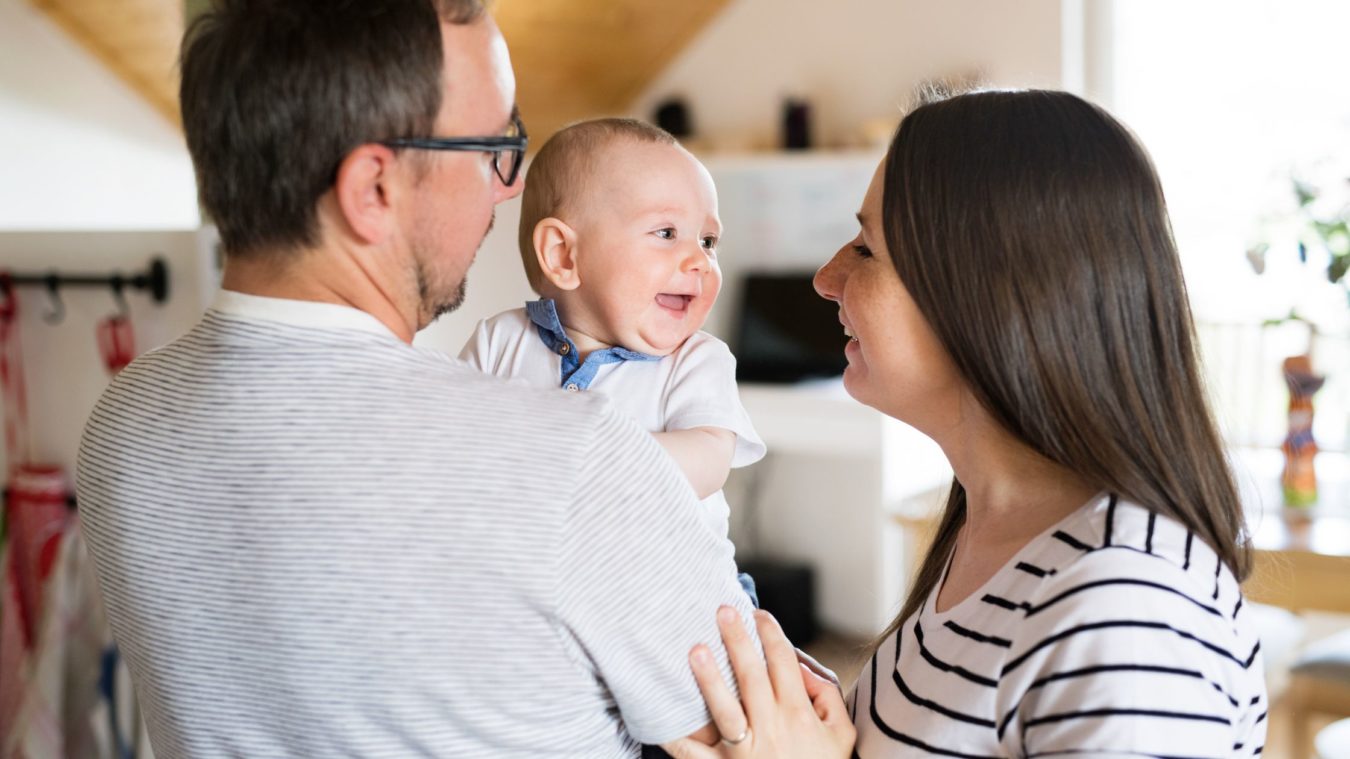
Which got me curious as to when do babies realise you are their mum or dad? And when do they recognise themselves? They will naturally recognise mum’s voice first because they are used to it from being in her tummy. And then, they’ll recognise your face probably from around three months old. And then their siblings and other parents shortly afterwards. Basically, the more they see someone, the quicker they will recognise them.
Recognising themselves actually comes a lot later. When my daughter was a baby and she saw herself in the mirror, she’d start chatting. Did she know she was talking to herself? I have no clue. Around nine months, a baby can differentiate between a picture of a toy and the real thing, the real 3D toy. Whilst they can recognise the difference (between a picture and a toy in real life), well that’s one thing. But when do they recognise themselves? That takes a little bit longer.
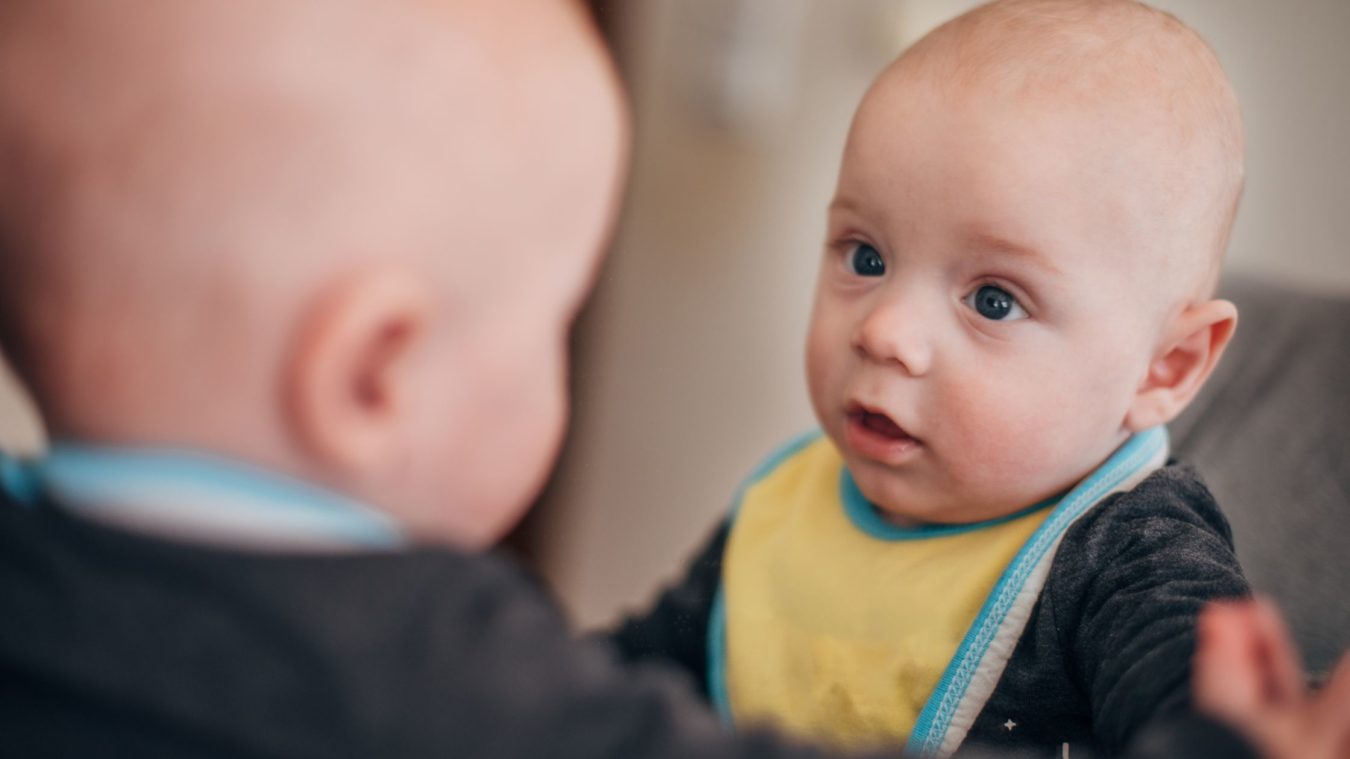
Before, when they were chatting to themselves in the mirror, they were just being sociable. They are just enjoying the fun of the moment, of looking at the face in the mirror. It’s around 18 months that experts reckon that they realise it’s actually their own reflection. And that’s when they will start recognising themselves in photographs. And then looking at photographs with them just takes on a whole new meaning.
Toddler Selfies …
And then that’s when the toddler selfies begin. Yes, one day you’ll look at your camera roll and discover you have got a lot of photographs. Maybe of their face, maybe just their forehead, or it could just be an extreme close-up of a nose or a mouth. They absolutely love a front-facing camera. It’s the new mirror to them. And they are just exploring.
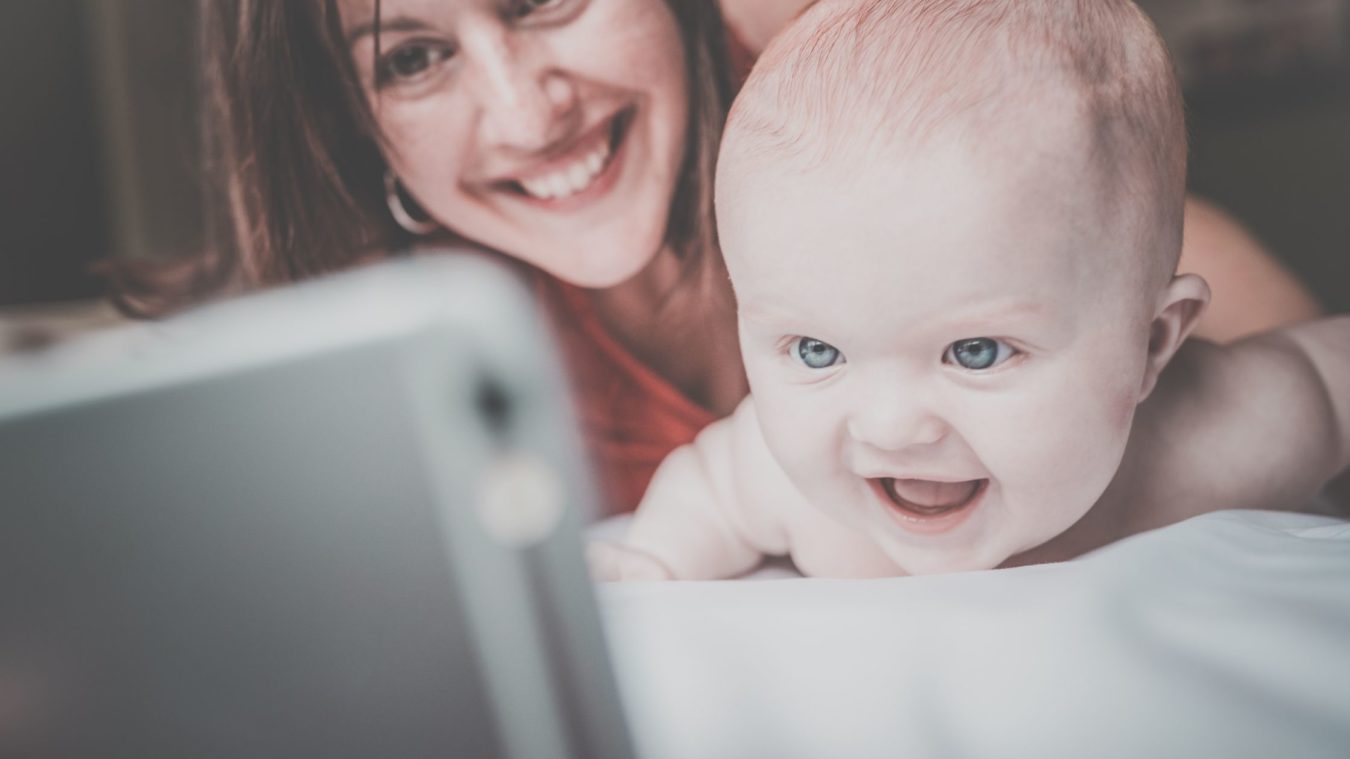
You might not want a whole camera roll full of those pictures, but I wouldn’t delete them all. Keep some because they mark a chapter in their development after all. And trust me, when the teenage years hit, you’ll love looking back at these candid images. They’re still taking selfies as well, but the ones of them as a baby are different. Aren’t they?
During toddlerhood, they’re just so unselfconscious. They accept how they look and who they are. And the “I do it!” phase is so much better than the “no!” phase. I’d love to hear if you’ve got that moment of recognition captured in a photograph. I think it should be on your list of essential photos.
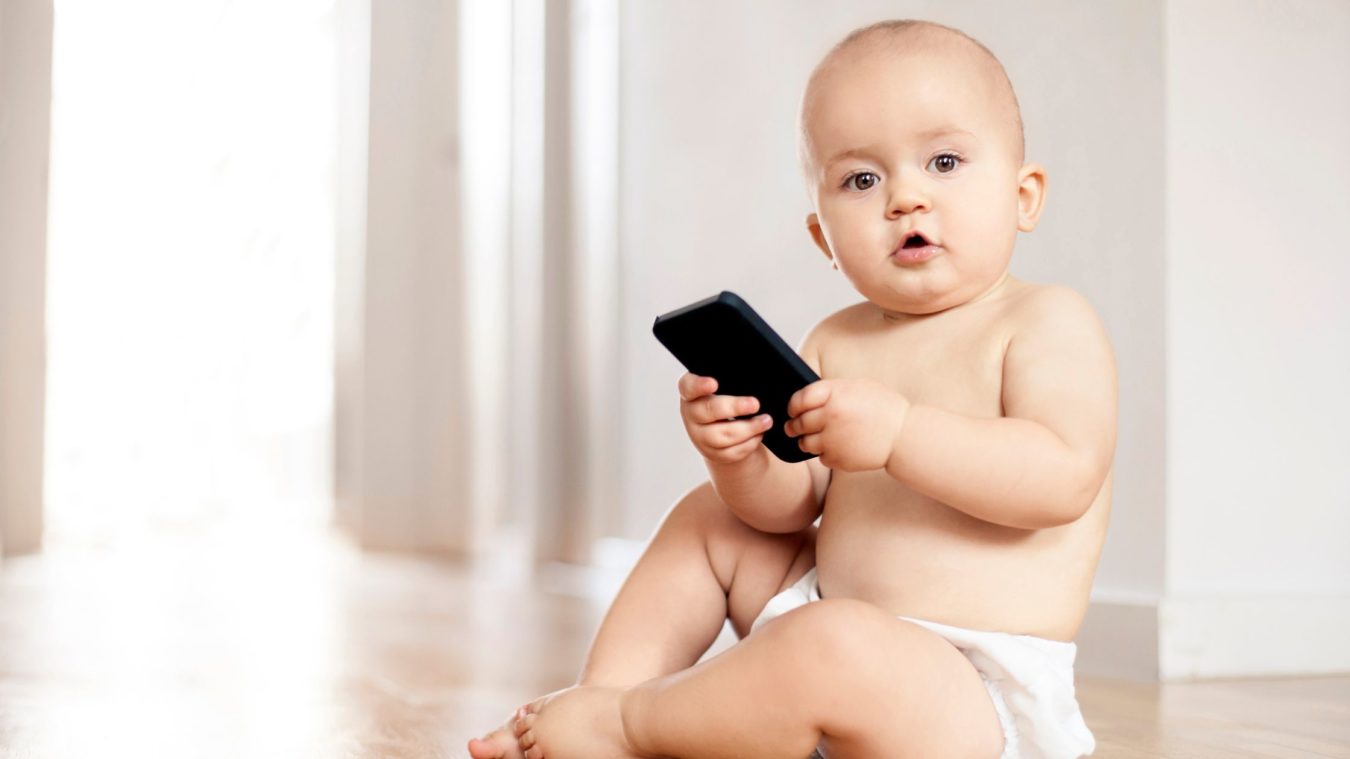
It’s one of the reasons I always have a parent next to me when I’m photographing a three/four month old, as the parent will get the best smiles. Well, they will, until they get used to me, and then they will just laugh at me as well.
That’s all for this episode. I hope you’ve enjoyed listening along. Do give the podcast a like, and a follow on your preferred player.
Book your own baby portrait experience with Sue.